 Telegram Growth Studio
Domain Takedown Service: Professional Malicious Domain Removal (24–72h)
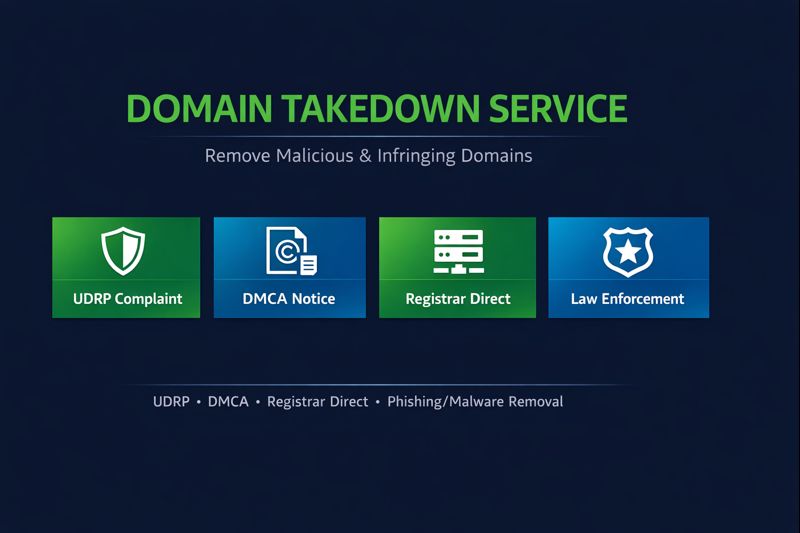
When a malicious, phishing, infringing, or counterfeit domain puts your brand at risk, our domain takedown service removes it fast. We use UDRP arbitration, DMCA notices, and registrar-direct abuse reports to suspend or cancel harmful domains within 24–72 hours. We serve brands, trademark owners, agencies, and enterprises globally with a refund-backed SLA, full documentation, and verified removal confirmation.
Domain Takedowns in 2026: What Changed
As of 2026, registrars are processing abuse reports faster, largely because ICANN's updated Registrar Accreditation Agreement now obligates registrars to acknowledge and act on well-documented abuse complaints within tight windows. For clear phishing and malware cases, registrar-direct suspension is more reliable than ever and usually beats UDRP on speed. Two shifts matter most this year: AI-generated phishing kits have multiplied lookalike and typosquatting domains, so evidence packages now need to capture live content quickly before it rotates; and threat-intel feeds (Spamhaus, PhishTank, Google Safe Browsing) are weighed more heavily by registries when they decide on suspension. In 2026 our recommended best practice is parallel filing—abuse report plus DMCA or UDRP—paired with ongoing monitoring. If a malicious domain is also damaging your search results, combine takedown with online reputation repair, and use our website takedown service when hosted content, not just the domain, must come down.
1) What is a domain takedown service and who needs it?
A domain takedown service removes domains used for malicious purposes: phishing attacks, malware distribution, trademark infringement, counterfeit sales, brand impersonation, and cybersquatting. Our service handles the entire process—from evidence collection and legal filing to registrar coordination and final verification.
We work with brands, creators, agencies, SMBs, enterprises, and law enforcement to remove malicious domains fast. Whether it's a fake login page, a counterfeit storefront, or a domain stealing your trademark, we know how to disable it.
2) Three core methods: UDRP, DMCA, and registrar-direct
UDRP (Uniform Domain-Name Dispute-Resolution Policy) is best for cybersquatting and trademark-based disputes. It's a formal arbitration process through WIPO or other providers, requiring proof of trademark ownership, confusing similarity, and bad-faith registration. UDRP results in domain transfer or cancellation, but takes 40–60 days.
DMCA (Digital Millennium Copyright Act) works when the domain infringes copyright—stolen logos, copied content, pirated material. It's typically faster than UDRP for U.S.-based hosts and requires proof of original copyright ownership.
Registrar-direct abuse reports are the fastest method. Most registrar terms of service prohibit phishing, malware, fraud, and abusive content. We file an abuse complaint directly with the registrar, citing the policy violation. Typical processing: 24–72 hours.
3) Step-by-step: how domain takedown works
- Investigation & scope: We identify the domain, document WHOIS records, gather screenshots, and assess which removal method applies.
- Evidence package: We compile proof of the violation—malicious content, trademark infringement, phishing evidence, copyright notice, or policy breach documentation.
- Legal routing: We choose the fastest compliant path: registrar-direct for abuse, DMCA for copyright, UDRP for trademark disputes, or law enforcement coordination for criminal activity.
- Filing & notification: We submit the complaint to the registrar, WIPO, copyright holder's agent, or relevant authority with all required evidence.
- Tracking & followup: We monitor the domain daily, chase registrar responses, and handle any disputes or escalations.
- Verification & reporting: Once the domain is suspended or cancelled, we confirm DNS resolution stops, verify de-listing from search engines, and provide full documentation.

4) Types of domains we remove
Phishing domains: Fake login pages impersonating banks, PayPal, Gmail, or other trusted brands to steal credentials. These violate registrar terms and can be removed via abuse reports and threat blocklists (Spamhaus, PhishTank, OpenPhish).
Malware-hosting domains: Domains distributing trojans, ransomware, or data stealers. These are listed on security blocklists and removed via registrar abuse, law enforcement, or registry escalation.
Infringing domains: Domains using your trademark, brand name, or confusingly similar strings (typosquatting). These qualify for UDRP complaints when registered in bad faith.
Counterfeit storefronts: Fake shops selling unauthorized products under your brand. These violate intellectual property laws and registrar terms, enabling fast removal.
Copyright infringement: Domains hosting pirated content, stolen images, or unauthorized use of copyrighted works. DMCA notices typically resolve these within 24–48h for compliant hosts.
5) Eligibility & required evidence
Registrar-direct abuse: Screenshots of malicious content, URL evidence, policy violation documentation, and WHOIS data. No formal legal evidence needed, but clear violation proof required.
DMCA takedown: Proof of original copyright ownership (registration, creation timestamp, metadata), comparison showing infringement, and the infringing URL.
UDRP complaint: Registered trademark (USPTO, WIPO, national registry), evidence of confusing similarity, proof of bad-faith registration (typosquatting, impersonation, extortion attempts, inactive parked pages redirecting to competitors).
We assess each case and advise which method offers the fastest, most compliant path. Sometimes multiple methods are filed in parallel for maximum impact.
6) Timeline & guarantees
Registrar-direct removal: 24–72 hours typical. Some registrars act within hours for clear abuse cases.
DMCA notices: 24–48 hours for U.S.-based hosts. International hosting may take longer.
UDRP arbitration: 40–60 days from filing to final decision. Faster than litigation but slower than abuse reports.
Refund-backed SLA: If we cannot file a compliant claim due to insufficient evidence or jurisdictional limits, we refund our service fee. If the domain remains active after 90 days despite proper filing, we reassess and escalate or refund.
7) Post-removal: monitoring & escalation
After removal, cybercriminals often re-register the same domain or use typosquatting variations. We offer optional post-removal monitoring to catch:
- Re-registration attempts on the same domain string
- Similar domains (typosquatting variations)
- New phishing sites targeting your brand
- Counterfeit listings on marketplaces
- Impersonation on social platforms
We can file preemptive UDRP complaints, coordinate with law enforcement for repeat offenders, or escalate to threat intelligence networks for broader blocking.
FAQ: Common questions about domain takedowns
How much does a domain takedown cost?
Pricing depends on the method and complexity. Registrar-direct removal is typically $250–450 per domain. DMCA notices: $300–500. UDRP complaints: $400–800 depending on WIPO or alternative provider. We offer bundle discounts for multiple domains and volume packages. See Pricing for details.
What if the registrar doesn't comply?
If a registrar ignores an abuse complaint, we escalate to: (1) the registry operator, (2) ICANN compliance office, (3) threat blocklists (Spamhaus, PhishTank), (4) hosting provider abuse team, and (5) law enforcement if criminal activity is involved. Multiple escalation points increase pressure.
Can we remove a parked domain with no active content?
Pure parked domains (blank pages or auto-ads) are harder to remove via abuse reports—they're not actively harmful. However, if the domain was registered in bad faith to impersonate your brand or squat your trademark, a UDRP complaint is effective (80%+ success rate).
Will removing the domain stop search engine indexing?
Once the domain is suspended or cancelled, registrar DNS stops resolving, the site becomes unreachable, and search engines de-index it within days. We can also request expedited removal from Google Search Console and Google Safe Browsing if listed.
Do we need a lawyer for domain takedowns?
For registrar-direct and DMCA, no legal counsel required—we handle it. For UDRP, legal review is recommended but not mandatory; we prepare WIPO-compliant complaints that stand up to arbitration. For criminal cases (malware, large-scale fraud), law enforcement coordination is recommended.
What if the domain owner disputes the takedown?
In UDRP, the respondent can submit a counter-statement. In abuse reports, they may request a reconsideration. We prepare strong evidence packages and can respond to disputes on your behalf. Most compliant cases succeed even with disputes.
Can you remove domains registered outside the US/EU?
Yes. UDRP, DMCA, and abuse procedures apply globally to most TLDs. ccTLDs (country-code domains) may have local procedures. We handle international cases and can coordinate with local law enforcement if needed.
Are AI-generated lookalike domains harder to take down in 2026?
Not harder to remove, but harder to keep up with. As of 2026, AI-generated phishing kits spin up typosquatting and homoglyph domains in bulk, and their content often rotates within hours. The takedown method is unchanged—registrar abuse, DMCA, or UDRP—but timing matters more: we capture live evidence (screenshots, WHOIS, hosting data) immediately, file against the active domain, and pair removal with monitoring to catch the next variant before it gains traction.