 Telegram Growth Studio
Channel Age & Trust Signals: How They Affect Telegram Ranking (2026)

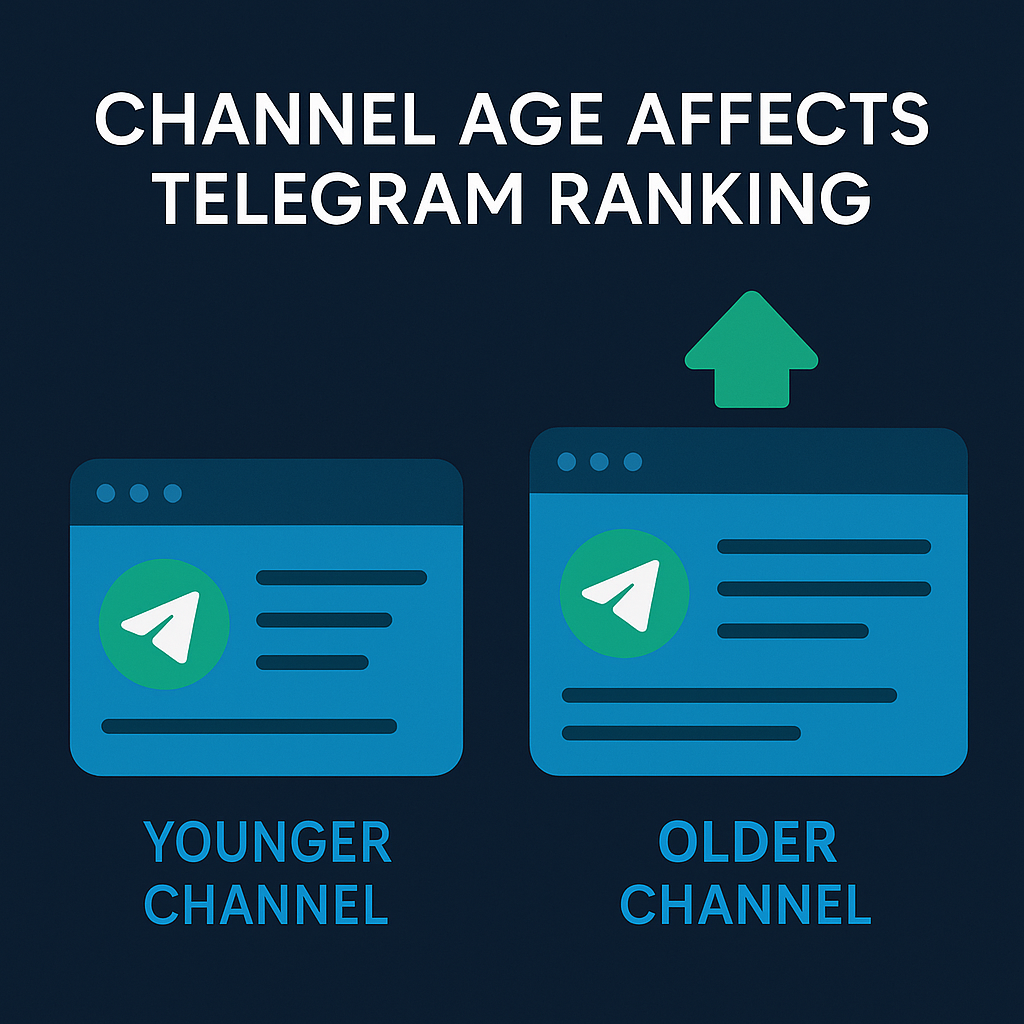
Telegram ranking isn’t only about keyword matches. In competitive niches, **channel age affects Telegram ranking** by serving as a proxy for reliability, while **Telegram SEO trust signals** (posting history, engagement-to-member ratio, retention, and clean moderation record) help the system filter spammy destinations from credible ones.
What are Telegram SEO trust signals?
- Age & stability: older creation date, fewer ownership/admin shocks.
- History cadence: consistent, human posting rather than bursts-and-gaps.
- Engagement quality: replies, reactions, forwards relative to audience size.
- Retention & growth curve: sustainable member acquisition (avoid inorganic spikes).
- Moderation footprint: minimal user reports; policy-compliant content.
These signals mirror how search systems generally infer credibility and reduce low-trust surfaces in results.
Why older channels rank better
All else equal, **older channels rank better (Telegram)** because they accumulate a longer record of normal behavior. A four-year archive of steady posts, predictable growth, and healthy engagement generates authority—while new channels must first prove similar patterns before they rise.
- Long-lived profiles tend to have cleaner violation histories.
- Historic forwards and mentions act like “citations.”
- Stable username/branding reduces ambiguity and preserves recall.
How to build trust for Telegram search
- Publish predictably: weekly cadence beats sporadic bursts.
- Protect brand continuity: keep bio/handle stable; avoid frequent pivots.
- Favor authentic engagements: reactions, forwards, saves > vanity joins.
- Preserve history: don’t wipe old posts unless required; history is a feature.
- Mind growth hygiene: aim for steady member inflow; avoid inorganic spikes.
Need an initial activity lift? Pair content cadence with targeted Mass DM to invite real, relevant users who actually engage.
Telegram SEO authority factors (the short list)
- Message lifespan and downstream reach (forwards, reshares).
- Engagement-to-member ratio (quality over raw size).
- Retention/returning readers; reduced churn after spikes.
- Association with trusted admins/brands; verified entities where applicable.
- Clean moderation history (low reports, no policy strikes).
Rename strategy without losing ranking
Rebrands are sometimes necessary. Use this **rename strategy without losing ranking**:
- Choose a partial rename that preserves core keywords (e.g., @CryptoRadar → @CryptoRadarHQ).
- Post a pinned announcement explaining the change and continuity.
- Keep posting cadence unchanged for 2–3 weeks to stabilize signals.
- Retain admin structure; avoid simultaneous admin resets or mass role changes.
- Maintain backlinks/mentions that point to your new handle for continuity.
Handle rebrand and Telegram SEO like a pro
Rebrands fail when they reset trust. Preserve history, keep content pillars, and keep your publishing routine intact. If you must change both name and niche, do it in **two stages** (name → wait → niche refinement) to avoid a sudden signal shock.
Quick wins you can deploy this week
- Pin an evergreen “Start Here” post that earns saves/forwards.
- Run a monthly roundup post — high forward potential with minimal effort.
- Cross-promote from credible channels; ask for contextual mentions instead of generic links.
- Use automation software for safe scheduling and reaction workflows.
- Invite qualified members via Mass DM — higher engagement per join.
FAQ
Do older channels always win?
No. Age helps, but fresh channels with consistent cadence, strong engagement ratios, and clean moderation can outrank rivals in focused niches.
Will deleting old posts help?
Generally no. History contributes to trust; prune only clearly harmful/irrelevant content.
How fast after a rename does ranking normalize?
Usually within 2–3 weeks if cadence and audience behavior remain stable.
What hurts trust the most?
Inorganic spikes, spammy engagement patterns, frequent handle changes, and user reports.